
The Anarchist Prince Who Challenged Darwin, Lenin, and Leo XIII
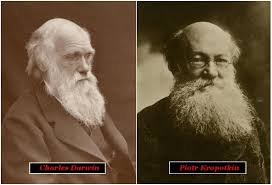
Piotr Kropotkin, a naturalist and anarchist thinker, refuted the distortion of Social Darwinism by demonstrating that cooperation and mutual aid are essential biological factors for survival, beyond mere competition. In his work, he challenged both savage capitalism and authoritarian statism and hierarchies. His legacy resonates today in cooperative structures such as those in Bolivia and proposes a third way against extreme individualism and state control, centered on reciprocal aid for the common good.
Pope Francis: His Legacy One Year After His Departure

My tribute to Pope Francis on the first anniversary of his death, through this column that synthesizes the lecture I gave at the Saint Jerome Seminary in La Paz. Francis was a pontiff who profoundly renewed the life of the Church and provided fundamental guidance to humanity.
Black Legends and Virtuous Histories of the Americas

The story of the arrival of the smallpox vaccine in Hispanic America is fascinating, as is the life of the heroic group that carried out the life-saving mission. Furthermore, it stands in stark contrast to the biological warfare of the British army in the Great Lakes region and serves to stop fueling “black legends.”
Energy Storage

This article analyzes the viability of the energy transition, arguing that while renewable sources are now more cost-effective than fossil fuels, the primary challenge remains their inherent intermittency. By exploring various storage solutions, technical solutions exist despite their added costs. Focusing on Bolivia, a comprehensive Energy Transition Plan that democratizes generation through regulatory incentives and attracts diverse private and community investment is mandatory.
Metaphysics and Physics Facing the Preferential Option for Matter

The article advocates for a balance between physics (which explains the “how”) and metaphysics (which seeks the ultimate “why”). A recent LHCb discovery at CERN potentially explains why, after the Big Bang, matter survived while almost no antimatter did (instead of mutually annihilating). Although the evidence remains preliminary, it strengthens the idea that the universe exhibited a “preferential option for matter” by breaking fundamental symmetries, keeping both the scientific enigma and the vibrant frontier between physics and metaphysics very much alive.
The Nobel Prize in Economics and the Role of the State in R&D

The Nobel Prize in Economics awarded to Mokyr, Aghion, and Howitt for their work on endogenous growth through “creative destruction” has sparked debate about the role of the state in research and development (R&D). Endogenous growth, driven by internal factors like human capital and innovation, contrasts with exogenous growth reliant on external resources. Creative destruction describes how new innovations replace outdated products, as seen in the evolution of cell phones. While the laureates advocate limiting the state’s role to protecting smaller innovators, examples like China’s state-driven R&D success and the U.S.’s public-funded military-industrial research highlight the state’s importance. In developing nations like Bolivia, the state should fund basic research, leaving application to efficient private companies to foster innovation and critical thinking among youth.
Lourdes

Lourdes is much more than the 72 miracles certified in 167 years since the apparitions of the Virgin to Bernadette Soubirous in 1858.
Lourdes, an important Christian destination, is characterized by its purifying water, its spiritual climate of peace and ceremonies such as the torchlight procession.
In addition to physical healings, the author experienced personal “other miracles”: a reunion with a Bolivian friend in Paris, an unexpected seat at a packed Mass with cancer survivors like himself, and the miraculous recovery of a lost hearing aid. A prayer for the healing of Bolivia from populism could not be missing, trusting in a change with the new government.
Scientific research in the Bicentenary

The column is about the relevance of Research an Development (R+D) for Bolivia in its Bicentenary. Natural laboratories and horizontal cooperation are the clues for successful research.
The expensive banquet of Artificial Intelligence

The article highlights the enormous energy and resource consumption required by Artificial Intelligence (AI), comparing it to other large consumers.
Conclusion: The development of AI involves very high environmental and economic costs, and its sustainability will depend on improving technological efficiency and educating users. Countries like Bolivia could benefit if they can strategically integrate into this value chain
The Summit of the Lament on Energy

This column is a short summary of a Summit on Energy where laments and reproches were heard from specialists and authorities. Hydrocarbons, electricity generation and lithium economy were the main issue exposed and discussed in the event.