
Energy crisis or hydrocarbon crisis?

With the imminent collapse of YPFB, some proposals to refound Bolivia’s largest public company are being analyzed and it is suggested that the opportunity of the hydrocarbon crisis be used to promote the country’s energy transition.
The Nobel Prize in Economics and the Role of the State in R&D

The Nobel Prize in Economics awarded to Mokyr, Aghion, and Howitt for their work on endogenous growth through “creative destruction” has sparked debate about the role of the state in research and development (R&D). Endogenous growth, driven by internal factors like human capital and innovation, contrasts with exogenous growth reliant on external resources. Creative destruction describes how new innovations replace outdated products, as seen in the evolution of cell phones. While the laureates advocate limiting the state’s role to protecting smaller innovators, examples like China’s state-driven R&D success and the U.S.’s public-funded military-industrial research highlight the state’s importance. In developing nations like Bolivia, the state should fund basic research, leaving application to efficient private companies to foster innovation and critical thinking among youth.
The Council of Nicaea and the Heresies of the MAS: An Analogy

As at the time of the Council of Nicaea, today in Bolivia the problem of that religious congregation that is the “Grupo de Puebla” is the heresies of the Movement Towards Socialism, MAS, based on mutiny to the absolute power of “father Evo”, the timid rebellion of the “son Andronico” and the rout of the patriarchs (David and Lucho), whereas the disoriented disciples wander toward new horizons of (Rodrigo) Paz.
The Parable of the Evil Harvester

The column allegorically critiques the mismanagement of a prosperous village by the Harvester, who reaped abundant crops without sowing or tending the land, leading to eventual decline. Despite warnings from experts, the Harvester and his loyal Cashier failed to invest in sustainable practices. The Cashier took over, planting poor-quality seeds with inadequate resources, further indebting the village while enriching his allies. Now, a new administrator, skilled in sowing, faces the daunting task of restoring the barren land amidst debts, mismanagement, and the Harvester’s lingering claims. The column questions whether the new leader will fall for the Cashier’s empty promises of future prosperity or focus on diligent sowing to ensure sustainable harvests.
Bicentennial Fitness: few pounds in the pocket and less pounds in the body
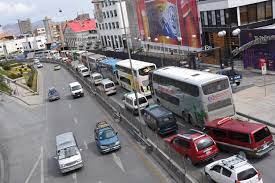
The article satirically defends Bolivian President Luis Arce Catacora’s government, portraying crises like fuel shortages, long gas lines, and dollar scarcity as clever strategies to promote physical fitness, meditation, and financial discipline. It mocks inflation, food scarcity, and foreign policy moves as part of a survival-driven, witty approach to governance, celebrating Bolivia’s resilience amid hardships.
The expensive banquet of Artificial Intelligence

The article highlights the enormous energy and resource consumption required by Artificial Intelligence (AI), comparing it to other large consumers.
Conclusion: The development of AI involves very high environmental and economic costs, and its sustainability will depend on improving technological efficiency and educating users. Countries like Bolivia could benefit if they can strategically integrate into this value chain
Rebaptizing the State

The column suggests that Bolivia should be re-baptized in order to overcome the present and chronic crisis .
The re-baptism has two times: the exorcist time of “renounces” and the healthy time of “beliefs”.
Government forewarned, half saved

The present crisis on hydrocarbons in Bolivia could be avoided if the government had heard the warning that many analysts expressed publicly.
The Summit of the Lament on Energy

This column is a short summary of a Summit on Energy where laments and reproches were heard from specialists and authorities. Hydrocarbons, electricity generation and lithium economy were the main issue exposed and discussed in the event.
Lessons from the Blackout

The recent blackout in Spain offers a lot of lessons about energy policies and electric grids. The column analyse some of them.